EPA & DHA
Salmon provides the long-chain omega-3 fats EPA and DHA directly. The body can incorporate them into cell membranes and signalling pathways.


Essenzcode · Cycle & nutrition
What EPA and DHA may have to do with inflammatory messengers, period pain and PMS, why one portion of salmon is not a hormone promise, and what I have observed differently since 2022.
My story started with a firm no
For years, salmon was one of those foods I rejected before it reached my plate. The smell, the soft texture, the strong flavour all put me off. Being told it was healthy did not make it more appealing. Food does not work through reason alone. A food may contain valuable nutrients and still feel completely wrong to you.
In 2022, after the disrupted years of the pandemic, I started paying closer attention. My routine had changed and my cycle felt different too. Some months were more exhausting, the days before my period pulled me down more deeply, and the first days felt louder than they used to. I did not want to turn every symptom into a diagnosis. I wanted to understand whether my everyday meals were actually supporting what my body needed.
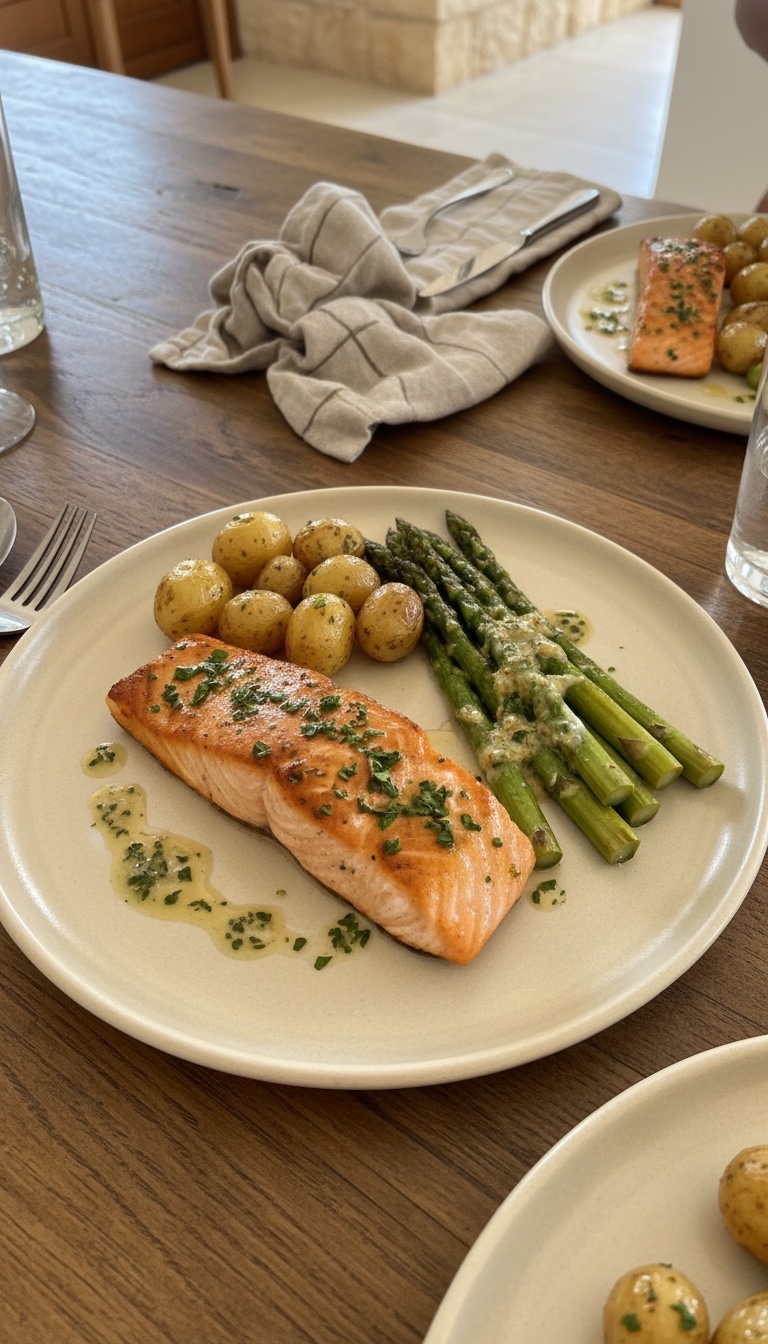
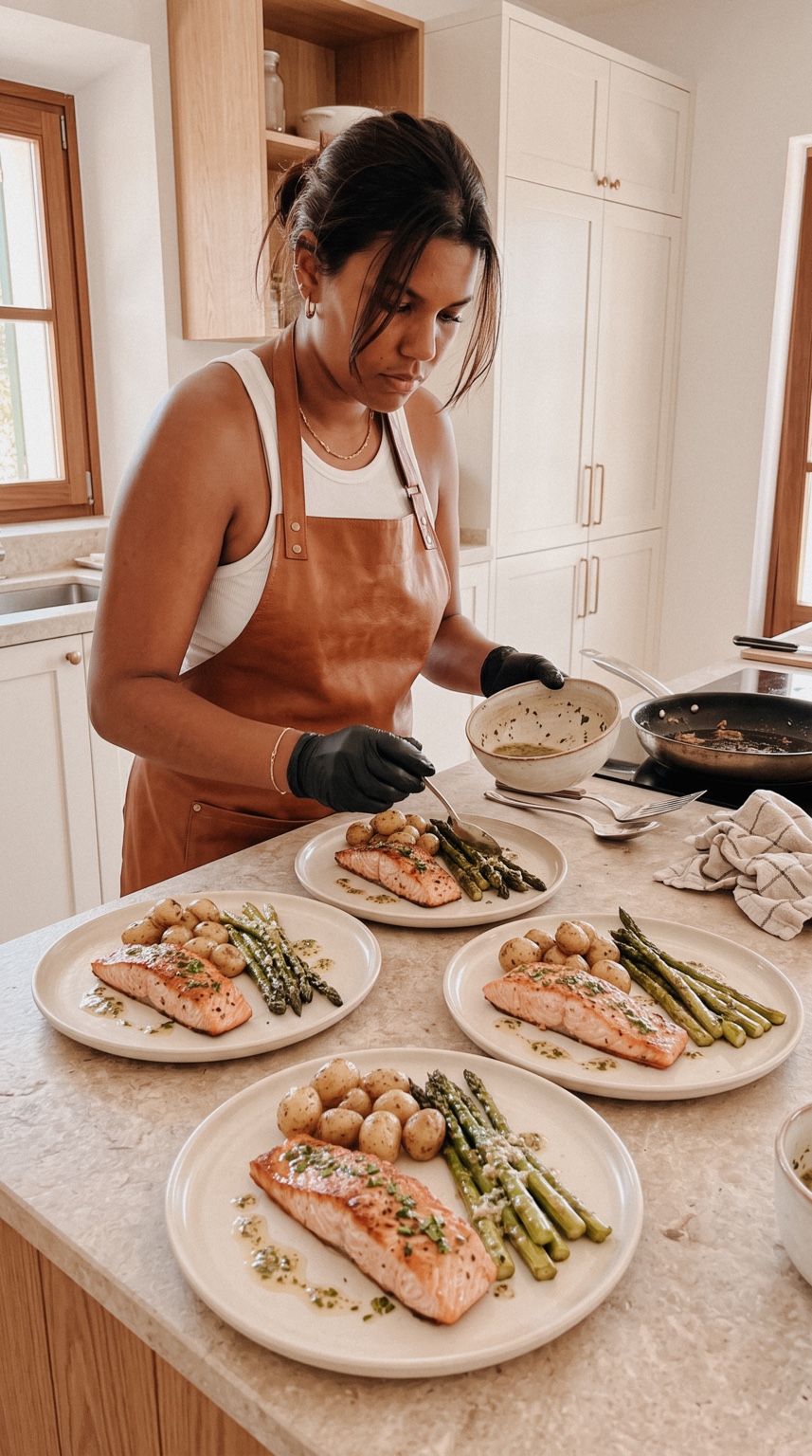
Salmon did not return as a miracle solution. It returned as an experiment. First seared until crisp, with lemon, plenty of garlic, herbs and a little heat. Later with baby potatoes, green asparagus and a bold herb sauce. It had to taste like my cooking, not like a health assignment. The real shift was larger than one fish. I began to observe fat, protein, satiety and my cycle together.
Salmon provides the long-chain omega-3 fats EPA and DHA directly. The body can incorporate them into cell membranes and signalling pathways.
Omega-3 fats are connected to pathways that create both pro-inflammatory and inflammation-resolving messengers.
Meta-analyses suggest omega-3 may reduce the severity of primary period pain for some people. It is a possible effect, not a promise.
Salmon also provides protein. With potatoes, vegetables and a good sauce, it becomes a meal that carries you beyond a single nutrient.
What omega-3 may have to do with your cycle
Cycle nutrition is often reduced to claims that one food will balance hormones. Biology is more complex. The menstrual cycle involves communication between the brain, ovaries, hormones, energy availability, stress, sleep, health conditions and many other influences. Salmon cannot organise that system on command.
EPA and DHA are still interesting. These omega-3 fats form part of cell membranes and influence the messengers the body can produce. Prostaglandins are involved in period pain because they help the uterus contract. Higher levels of certain prostaglandins may contribute to stronger cramping, nausea, headaches or diarrhoea. This is one reason researchers study omega-3 in relation to inflammatory processes and menstrual symptoms.
Recent reviews suggest a possible benefit for primary dysmenorrhoea and PMS. Many studies, however, used supplements with defined doses for limited periods. That does not mean a salmon fillet has the same effect or that everyone responds alike. Research offers a useful connection, not a personal diagnosis.
What studies say and what remains open
I like research when it makes us curious instead of fearful. Omega-3 and period pain are worth exploring, yet it would be unfair to turn them into a simple formula. Endometriosis, adenomyosis, fibroids, thyroid conditions, PCOS, iron deficiency and other medical issues do not disappear when fish appears more often on the menu.
Dose is not directly transferable either. A supplement contains a defined amount of EPA and DHA. Salmon varies by species, origin and feed. Food, however, is also a complete meal with protein, fat and accompanying ingredients. Nutrition usually works as a pattern across weeks and months, alongside sleep, workload, movement and enough overall energy.
I therefore do not say that salmon will remove your pain. If you like and tolerate it, it can be a useful omega-3 source within a supportive diet. If you dislike it, you do not need to force it. Sardines, mackerel and herring also supply EPA and DHA. Walnuts, chia and flax mainly supply ALA, which the body converts to EPA and DHA only to a limited degree.
What it changed in me
My greatest change in 2022 was not that everything suddenly became perfect. I stopped looking at my cycle in isolation. I noticed whether I had skipped meals before my period, whether my days ran on coffee and small bites, how I slept, and whether protein and nourishing fats appeared regularly on my plate.
In some cycles I noticed that I did not fall quite as deeply into that drained, hollow feeling before menstruation. Meals carried me longer and some cramps felt less sharp. I cannot prove salmon caused this. Several changes probably worked together: more regular meals, more protein, better fat sources, closer observation and less fighting with my appetite.
That is what salmon opened in me: not another food rule, but a better question. What happens when I judge food by how it is prepared, how it tastes and how I feel afterwards? Resistance turned into curiosity, and curiosity became a meal I now genuinely enjoy cooking.
How I build the plate
I sear it well and use garlic, black pepper, smoked paprika, lemon zest, parsley and sometimes chilli. Nutritious food does not have to taste timid.
Potatoes, rice, quinoa or good bread turn fish into a full meal. Around menstruation, enough energy may matter more than finding the perfect superfood.
Asparagus, leafy greens, broccoli, fennel or roasted vegetables bring colour and structure. Olive oil, lemon, herbs, salt and garlic belong here too.
Warm lemon herb butter, yoghurt with dill and garlic or salsa verde keeps the plate juicy and softens the heaviness that used to bother me.
The Essenzcode view
Note when symptoms begin: before bleeding, on day one or later.
Look at the full pattern: meals, sleep, stress, digestion, movement and bleeding.
Include omega-3 sources regularly and enjoyably instead of loading one portion with expectations.
Notice whether you eat enough before your period. Strong appetite is not automatically a lack of discipline.
Test preparations you actually like. Food can only support everyday life if you are happy to eat it.
Do not try to eat symptoms away
New, severe or worsening period pain, very heavy bleeding, bleeding between periods, fainting, fever, pain during sex or a cycle that changes clearly should be medically assessed. Food may support you, but it should never persuade you to tolerate warning signs for longer.
If you are pregnant, trying to conceive, taking blood thinners or considering high-dose omega-3 supplements, speak with a clinician. For fish, look at species, origin and current consumption advice. Variety remains sensible.
Further reading
One sentence to keep
Salmon can provide EPA, DHA, protein and pleasure. What your cycle makes of it depends on much more. Listen for patterns, not perfect individual plates.
Discover the EssenzcodeFrom my kitchen in Mallorca
I cook for people and listen at the same time. I care about flavour, real life and the signals a body sends repeatedly. My Essenzcode combines that close attention with practical nourishment, without rigid rules and without turning one food into a saviour.
Work with me